Jl. Jend. Sudirman No. 52, Senayan, Kebayoran Baru, Jakarta Selatan, 12190
Ingredient Library
Reference entries for the botanicals and nutrients that appear most often in men's vitamin formulas.
Ingredient Library for Men's Supplements
Every bottle names its ingredients. Few explain them. This library covers the botanicals and nutrients that appear most often in men's formulas, with plain-language context on where each one comes from and how it is typically used in supplements. Use it as a reference when a label names something unfamiliar, or as a way to compare two natural supplements for men on their actual contents.
Entries are organized by ingredient type, not by product. Each one explains origin, common form, and typical role in a men's formula. We do not list recommended doses, because dosing depends on your health situation and a professional's judgment. What we do is clarify what the ingredient is, so you can read a panel without guessing and ask better questions when you need to.
By type
Botanical or nutrient. The split matters because the two halves of a panel work differently and are read differently.
Origin
Where the plant grows or where the mineral is sourced from, in plain terms rather than trade names.
Common form
Root powder, standardized extract, chelated mineral, or a specific vitamin form, since the form affects how much of the ingredient is actually present.
Typical role
Whether it contributes nutrients or functions as a positioning ingredient, and how that changes the way you compare two products.
Ingredient families
What actually sits inside a men's formula
Eight entries covering the bots and nutrients we field questions about most often.
Panax ginseng
Maca
Ginkgo
Fenugreek extract
Green tea extract
Vitamin D
B vitamins
Magnesium and zinc
Botanical entry
Panax ginseng
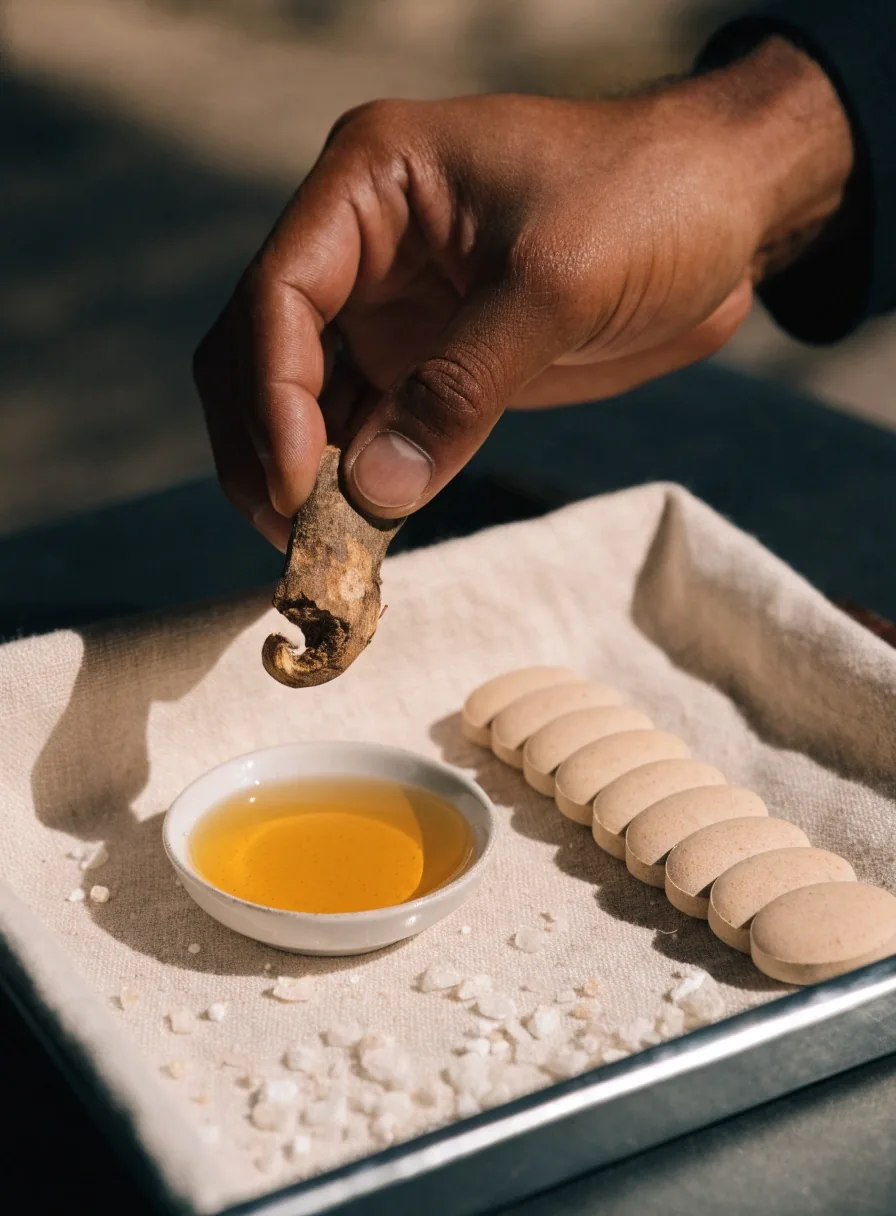
Panax ginseng is a root used in traditional preparations across East Asia and now one of the most recognizable herb ingredients in men's supplements. It appears in Indonesian and UK products, often paired with maca or other botanical extracts. In brand language, ginseng has become shorthand for vitality-oriented formulas. On a label, it can appear as a standardized extract or a root powder, and the form matters for how much of the ingredient is actually present.
When a men's vitamin formula leads with ginseng, read the disclosure line rather than the front of the bottle. A listed milligram amount tells you something; a named blend without figures tells you the ingredient is present but not how much of it you would actually be taking each day.
Botanicals are usually positioning ingredients rather than nutrient sources. That does not make them useless, but it does change how you read them. The vitamin and mineral section of the panel stays your primary reference.
Drying rack and dishes
Maca
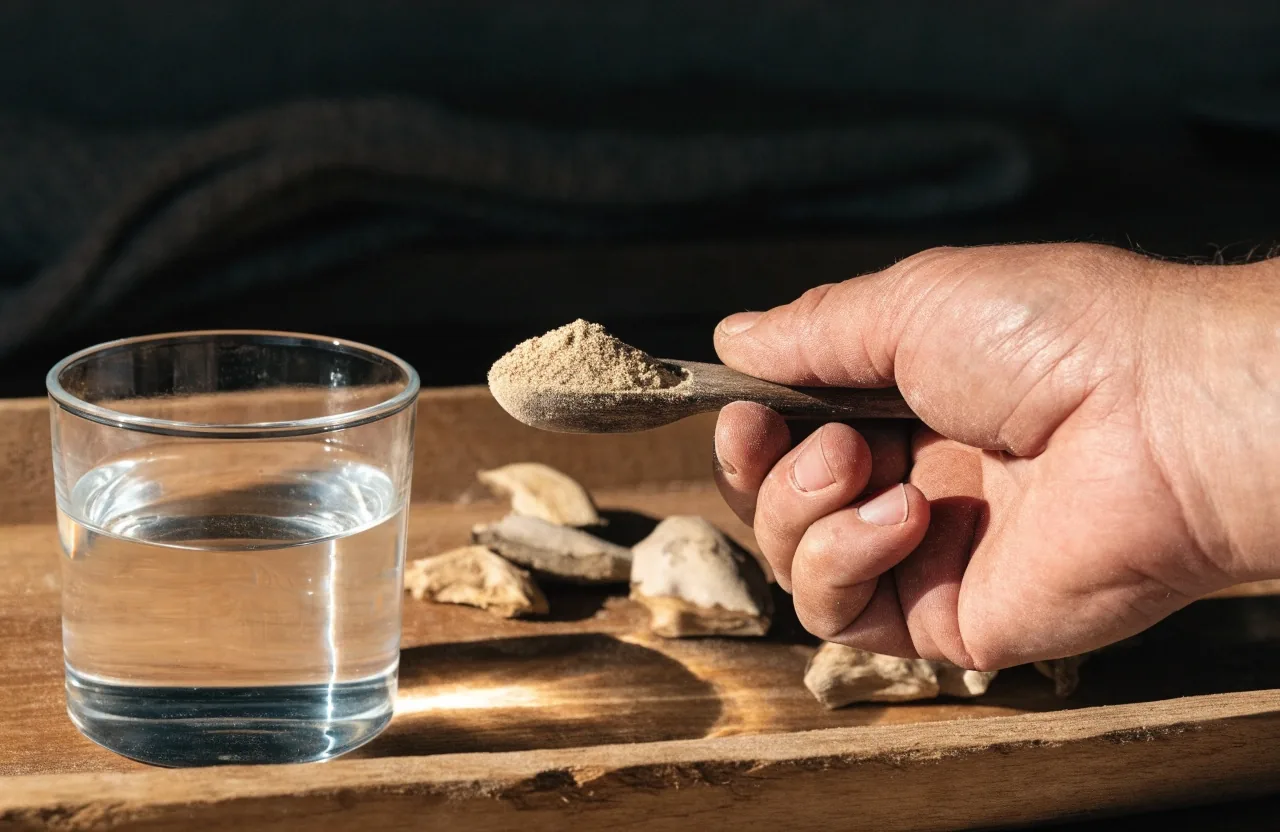
Maca is a root vegetable native to the Andes, usually sold as a powder or extract. It shows up in men's formulas alongside ginseng, often in blends that market themselves around stamina. Maca is not a vitamin or mineral, and it does not replace the nutrient section of a formula. Its role is botanical, which means the amount disclosed on the label is the only reliable way to compare one product's maca to another's.
Ginkgo
Ginkgo comes from the ginkgo tree and appears in some men's formulas, usually in blends that mention circulation or focus in their marketing. The extract is the common form. Like most botanicals, disclosed amount and standardization tell you more than the name alone. If a product lists ginkgo inside a proprietary blend, the actual quantity is not visible, and that limits how useful the comparison is.
Fenugreek extract
Fenugreek is a plant in the legume family, and its extract appears in men's wellness products, including listings grouped under marketplace categories for male health. It usually shows up in botanical blends. Fenugreek has a long history of culinary use, which makes it one of the more familiar ingredients in the category. Its presence on a label is a positioning signal as much as a formula decision.
Green tea extract
Green tea extract appears in whole-food and plant-based men's formulas. It is also a natural source of caffeine, which is worth knowing if you are sensitive to stimulants or take your capsules late in the day. In complex formulas, it usually sits alongside vitamins and minerals. Reading the caffeine content, when disclosed, is a useful habit.
Ashwagandha and other adaptogens
Adaptogen is a marketing category more than a scientific one, but it is the label you will see on shelves. Ashwagandha is the most common name in that grouping. It appears in men's formulas focused on stress or calm, rather than energy. The same rule applies: check whether the amount is disclosed, and treat the term as a category marker rather than a claim.
The nutrient half
Vitamins and minerals for men, read in order
The nutrient section is where a formula actually does its daily work. These entries carry amounts and percent daily values, so they are comparable in a way botanicals usually are not. Start here, then work back through the plant names.
Vitamin D
Vitamin D is one of the most frequently cited nutrients in men's multivitamin coverage. It is listed among important vitamins for men, and it is linked in mainstream health writing to bone health and immune function. Because sun exposure and diet both contribute, it is one of the nutrients men most often check for in a daily formula.
B vitamins
The B vitamin group, including B6, B12, and folate, comes up in men's formulas because of its role in energy metabolism and red blood cell production. You will see the group listed individually rather than as a single entry. B12 is especially relevant for vegan formulas, since natural food sources are animal-based. When comparing products, look at which B vitamins are listed and whether the forms are specified.
Magnesium and zinc
Magnesium and zinc are the two minerals that appear most often in men's formulas. Magnesium is involved in a wide range of normal body processes, which is why it is a common inclusion. Zinc is widely recognized and often included at meaningful amounts. Both are minerals you can also get from food, so it makes sense to look at your diet before adding a supplement that focuses on them.
Trace minerals
Calcium, selenium, manganese, chromium, and potassium appear in more complex formulas. Calcium and selenium sometimes pair with vitamin D. Manganese and chromium are trace minerals included at small amounts. Potassium turns up in formulas that take a broad approach. None of these are unusual, but their presence is often what distinguishes a basic multivitamin from a broader nutrient complex.
Reading a panel
Ingredient by ingredient, in the order the label prints them
A supplement facts panel lists nutrients with amounts and percent daily values. Botanicals sit in a separate section, sometimes with amounts, sometimes inside a proprietary blend. The "other ingredients" line covers fillers, capsules, and coatings. When you use this library to check an unfamiliar name, you are effectively translating the panel into something you can reason about. That is the whole purpose.
Once you can read the panel in order, comparing two natural supplements for men stops being a matter of brand preference. The disclosed numbers either exist or they do not, and that is the whole basis for a fair comparison.
Questions we get often
Clarifying the entries
Short answers on the questions that come up when readers start working through labels.
Still unsure
If an ingredient in a product you own is not listed here, send it over and we will look at the panel with you.
It is a group of ingredients listed together without individual amounts. You see which ingredients are included but not how much of each. It limits how well you can compare products.
Are botanical extracts as important as vitamins?
Botanicals are usually positioning ingredients rather than nutrient sources. The vitamin and mineral section of the panel remains the primary reference.
How do I know how much ginseng is in a formula?
Check whether the amount is listed in milligrams. If it sits inside a proprietary blend, the amount is not disclosed, and that applies to maca, ginkgo, and other botanicals the same way.
Why does vitamin B12 matter for vegan formulas?
Natural food sources of B12 are animal-based. Vegan formulas usually add B12 explicitly, so it is worth confirming it appears on the panel.
Where to go next
Use the library on your next label
Keep this reference open the next time you pick up a bottle of natural capsules for strength and vitality, and check the entries against the panel in front of you. The library is plain-language on purpose, so you can compare without a pharmacist in the room.
This library is an information resource about ingredients in men's supplements. It is not medical advice, and it does not replace guidance from a qualified professional. Reach us at [email protected] or +62 21 5296 0375, Monday to Friday, 09:00–18:00.
This website uses cookies to ensure you get the best experience on our website. Learn More